Grooming anxiety is a common problem faced by dog and cat owners. Trembling, rapid breathing, an attempt to escape or a refusal to enter the room are not “bad behaviour” but stress signals. To help your pet, it’s important to understand how fear works, how to recognise early signs of nervous system overload, and how to establish a predictable, safe routine.
Why is There Stress Before Grooming
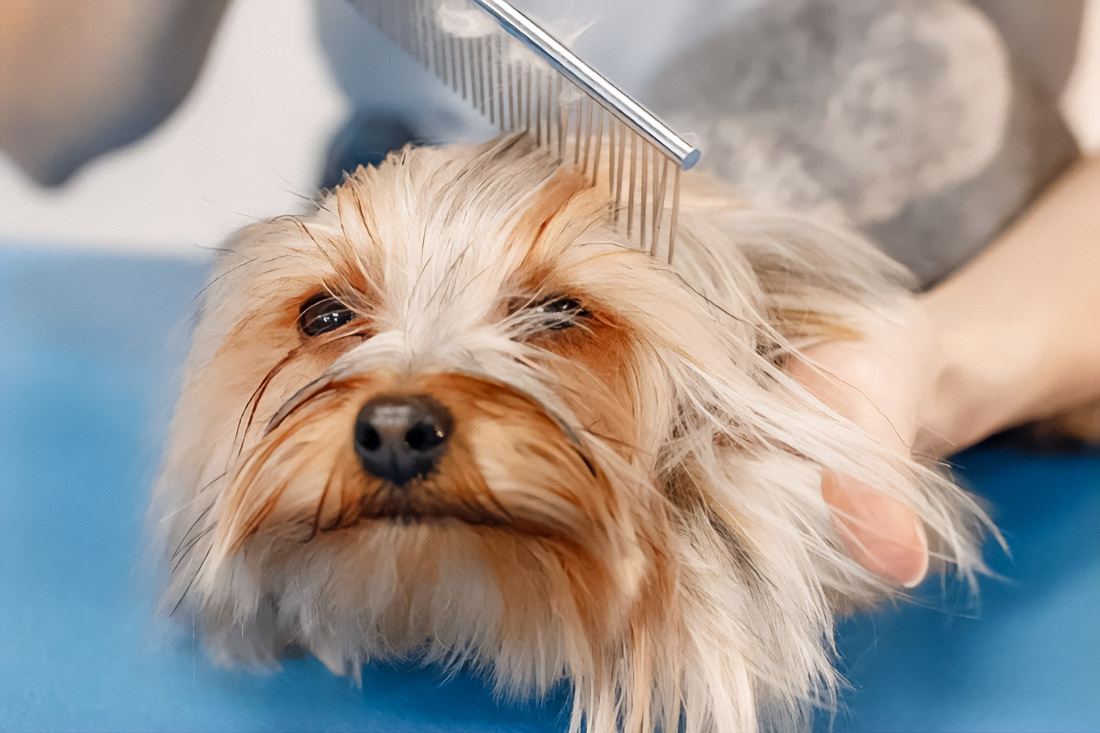
Grooming combines several triggers at once: noise, holding, touching sensitive areas, and an unfamiliar environment. For an animal, this may look like a loss of control.
The main causes of anxiety:
- Sensitivity to noise (drying, washing machines)
- Fear of touching, especially paws, ears, muzzle,
- Negative association after a painful experience
- Accumulation of triggers in one session
- Latent pain (for example, inflammation and skin sensitivity)
- Overload of the nervous system due to prolonged procedures
Even one unpleasant episode can form a sustained avoidance reaction. Repeated stress visits increase fear and may increase the risk of a defensive reaction, including growling or biting.
Stress Signals: What is Important to Notice in Time
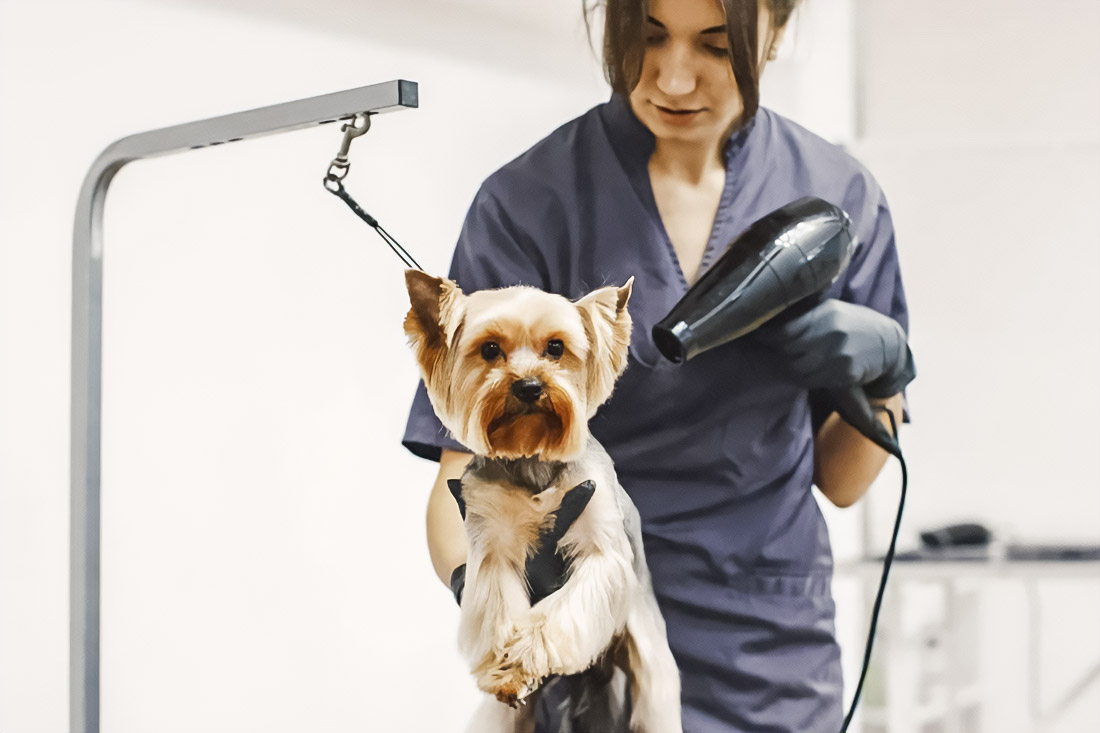
The animal’s body “speaks” before a strong reaction occurs. Early recognition is the key to reducing anxiety.
Frequent signals:
- Trembling or trembling
- Rapid breathing, shortness of breath, drooling
- Whale’s eye (the whites of the eyes are visible)
- Lip-licking and yawning as a stress signal
- Avoidance, refusal to move, attempt to escape
- Freeze or shut down
- Defensive reaction: growling, snapping teeth
In one of the analyses, 5 key signs of anxiety are highlighted, and trembling is the most noticeable of them. But it’s important to understand that trembling by itself is not evidence of injury or mistreatment. This is a physiological stress response.
It is especially important to respond to early signals. Even a short pause of 5 seconds can reduce tension and prevent you from going over the stress threshold.
How Anxiety Develops: The Accumulation Effect
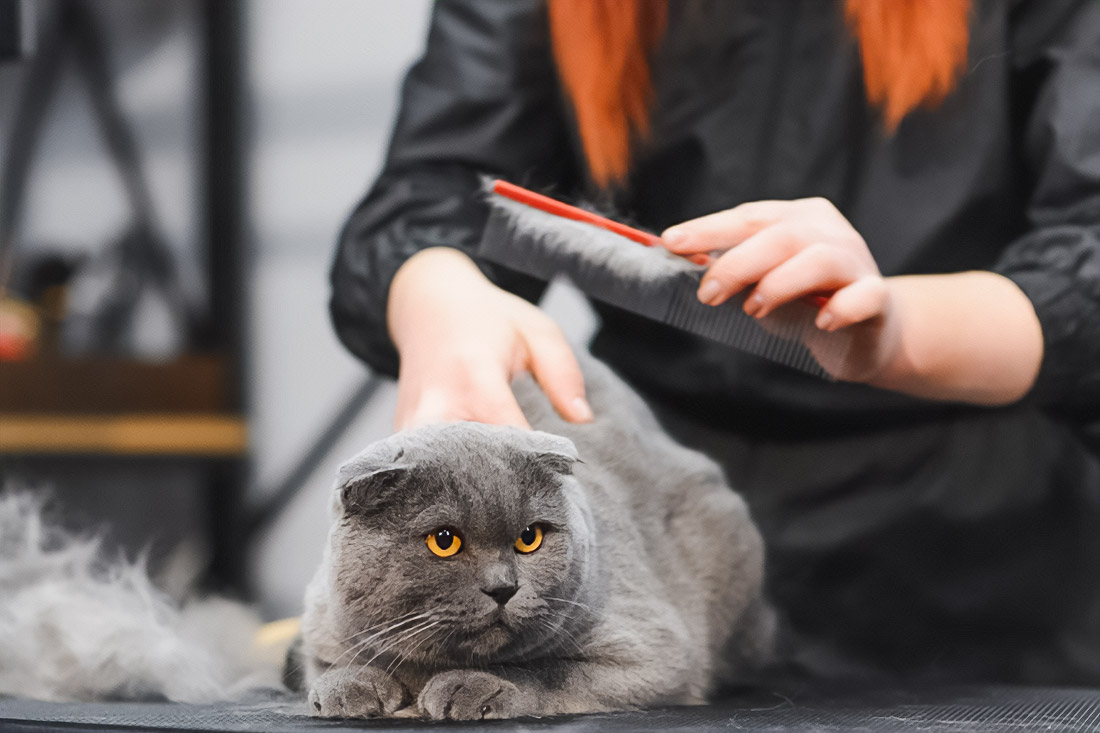
Stress rarely occurs suddenly. It accumulates more often:
road → entrance → waiting → table → paw treatment → drying → muzzle treatment
Each stage adds a load. When the threshold is exceeded, a protective reaction is activated. Therefore, many animals “hold on” at the beginning and then react sharply to their paws or face.
This is known as trigger accumulation, and managing it is essential in professional pet care Dubai environments.
Desensitization and Positive Reinforcement
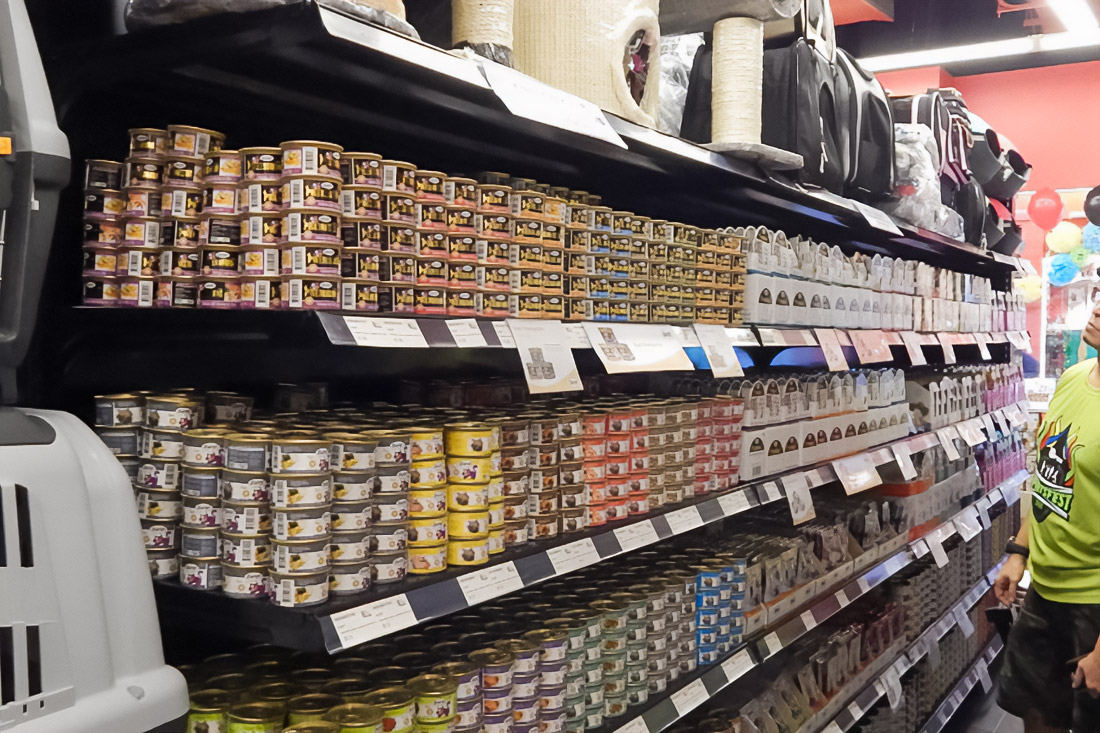
Working with anxiety does not begin in the salon but at home. The main approach is desensitisation and control conditioning.
How it works:
- Gradual familiarization with the tools
- Short sessions without pressure
- Positive reinforcement for calm behavior
- Formation of a new positive association
For example:
- First, show the machine in the off state
- Then turn on at a distance
- Then gradually reduce the distance
Each stage is secured through a reward. These can be high-value treats – especially valuable treats.
Working With Touch and Handling
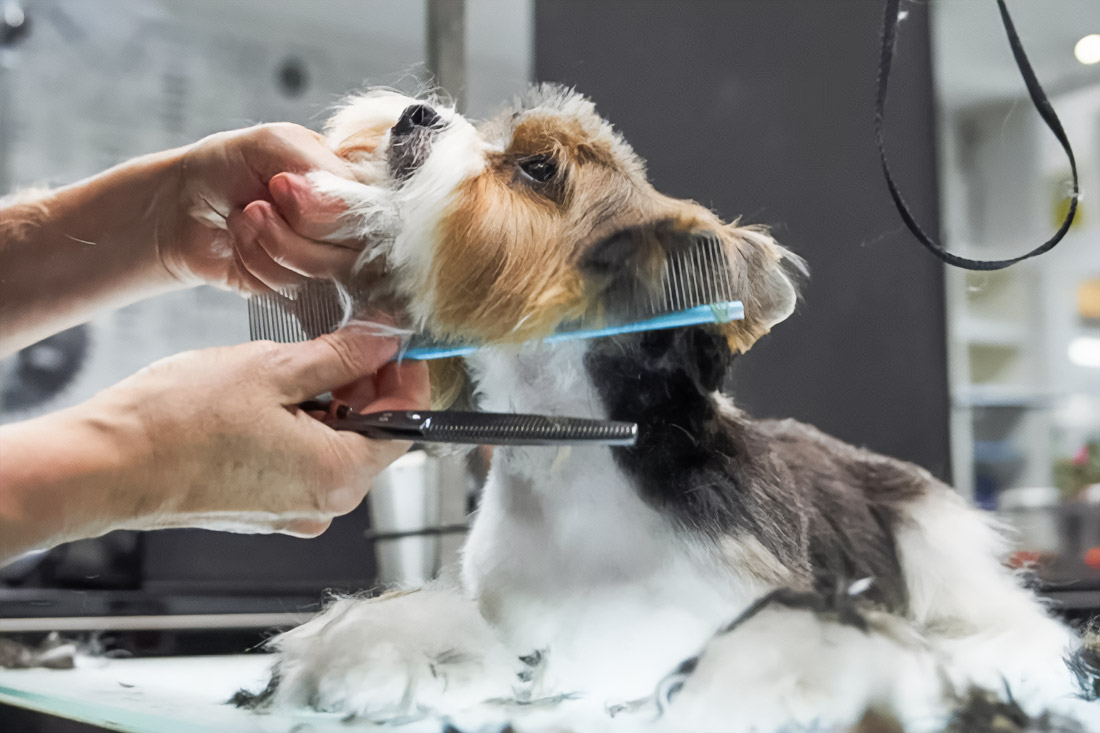
The fear of touching is a common cause of stress. Especially in the area of paws, ears and muzzle.
What helps:
- Regular adaptation to touch
- Gentle handling without sudden movements
- Short exercises at home
- Gradual increase in contact time
It is important that the pet does not exceed the stress threshold. If discomfort appears, it is better to stop and take a step back.
Predictable Routine and Short Sessions
Animals tolerate procedures better when they understand what is happening.
What reduces anxiety:
- Predictable routine
- The same sequence of actions
- Short sessions instead of long ones
- Regular visits
Interesting fact: in one example, it was noted that infrequent visits (once every 6 months) increase stress, while a more frequent but shorter format (for example, once every 6 weeks) makes the process more familiar and less frightening.
Minimal Necessary Grooming
If the pet is experiencing severe anxiety, it is important not to chase the perfect result.
The approach used is:
- Minimal necessary grooming
- Prioritize safety and comfort
- Avoiding difficult steps when the threshold is exceeded
This reduces the risk of injury and helps build trust gradually.
The Role of the Environment and External Factors
The environment directly affects the emotional state. What is important:
- Noise reduction
- Calm atmosphere
- Minimization of visual stimuli
- Stable surface (non-slip)
- Lack of haste
Even small environmental changes can significantly reduce stress levels.
Post-Grooming Recovery
After the procedure, the pet can:
- Sleep longer than usual
- Avoid activity
- Hide
- Be more attached
This is a normal reaction. The body recovers after the release of stress hormones. If the condition returns to normal after a few hours, there is no cause for concern.
When You Need Specialist Help
If anxiety:
- Increases with each visit
- Is accompanied by aggression
- Does not decrease when working at home
It is worth contacting a veterinarian or behavioural specialist.
Sometimes the cause may be pain or a medical problem. In such cases, the usual adaptation will not work without treatment. The main thing: trust and gradualism. Reducing anxiety before grooming is a process. There are no quick fixes here.
The combination works:
- Desensitization
- Positive reinforcement
- Predictable routine
- gentle handling
- Trigger control
- Respect for stress signals
When an animal feels safe, reactivity decreases, cooperation appears, and grooming ceases to be a source of fear.
This is the foundation of long-term success in both home care and professional pets grooming salon visits within pet care Dubai.
Hiking addict, coffee addict, guitarist, reclaimed wood collector and javascripter. Producing at the intersection of aesthetics and intellectual purity to answer design problems with honest solutions. I work with Fortune 500 companies and startups. Tropical swift lover. My mission is to show people that IQOS is a revolution in the world of smoking.