Chinese Tea Guide
A friendly primer for tea drinkers in the UAE
China grows more tea, in more styles, than anywhere else on earth. If you have ever stood in a Dubai supermarket aisle wondering whether to pick green, oolong or Pu-erh, this guide walks you through the essentials without the mystique.
Five things to know before you buy Chinese tea
- There are six main families. Green, white, yellow, oolong, black (called red in China) and dark tea, including Pu-erh.
- All six come from the same plant. Camellia sinensis. The differences come from how the leaves are processed, not from different species.
- Flavour follows geography. Fujian oolongs, Zhejiang greens and Yunnan Pu-erhs taste distinct because of altitude, soil and climate. This is the same idea as terroir in wine, documented in tea research by Chinese tea production studies.
- Loose leaf beats tea bags for anything above basic. Whole leaves unfurl, release layered flavour and can be steeped several times.
- Water temperature matters more than you think. Boiling water ruins a delicate green tea. A cooler pour brings out the sweetness.
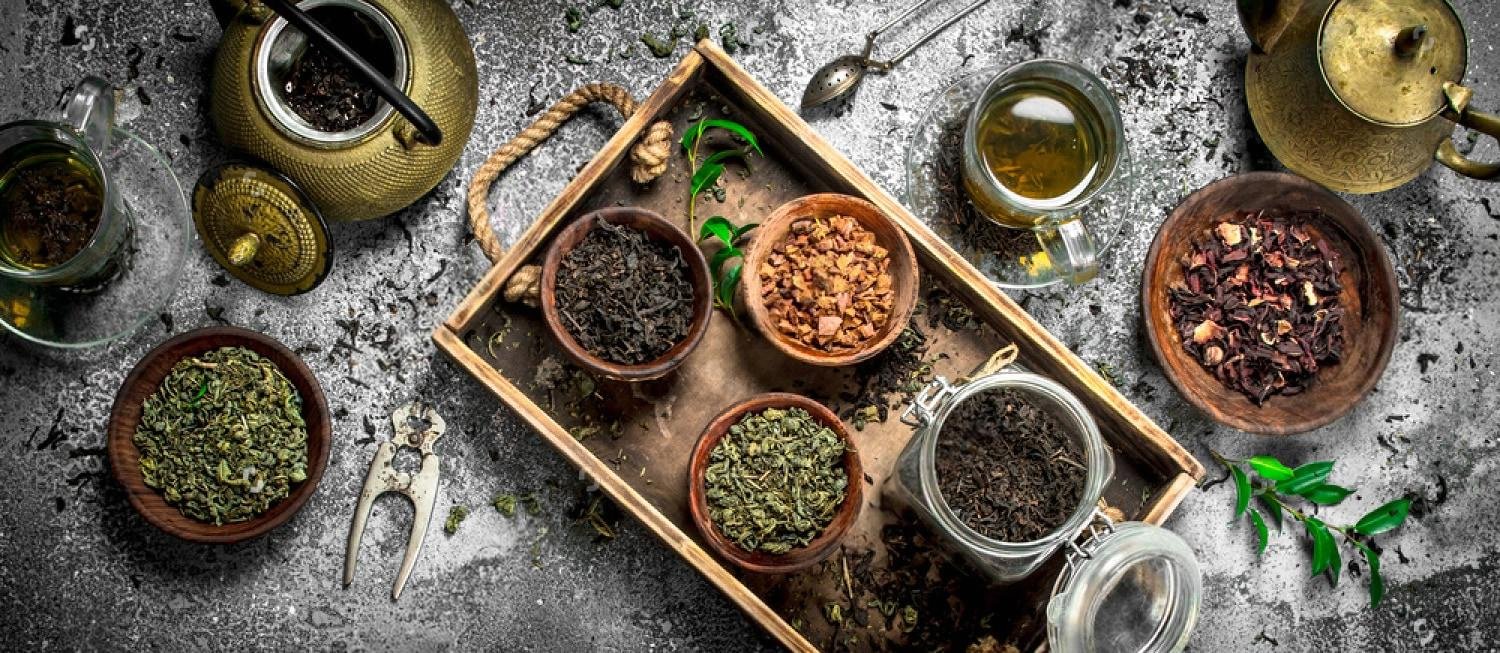
The six families at a glance
From bright green Longjing to earthy aged Pu-erh, each family sits somewhere on a spectrum of oxidation and roasting.
Section 1
The six main types, and what makes each one different
Green tea is fixed with heat almost immediately after picking, which stops oxidation and keeps the leaves vivid and vegetal. Dragon Well (Longjing) from Hangzhou is the classic reference: chestnut sweetness, a hint of steamed greens, very little bitterness when brewed correctly.
White tea is the least processed of all. Buds and young leaves are simply withered and dried. Silver Needle (Bai Hao Yinzhen) from Fujian is delicate, honeyed and slightly melon-like.
Yellow tea is rare, even in China. It goes through a slow smothering step that softens the grassy edge you get in green tea. Expect a rounder, mellower cup.
Oolong is partially oxidised, anywhere from 15% to 80%. Tieguanyin from Anxi is floral and creamy; Da Hong Pao from the Wuyi cliffs is roasted, mineral and dark. Black tea is fully oxidised: think Keemun or Dian Hong, malty and smooth. Dark teaincluding Pu-erh from Yunnan, is fermented after processing and can be aged for decades, developing earthy, woody depth.
Section 2: How to brew Chinese tea properly at home
Most people who say they do not like Chinese tea have simply been brewing it wrong. A green tea steeped in boiling water for four minutes will taste bitter and thin. The same tea, given cooler water and a shorter steep, will taste sweet and floral. Two variables do most of the work: water temperature and time.
- Green and yellow tea: 75 to 80 °C, 1 to 2 minutes. Use about 3 grams of leaf per 150 ml of water.
- White tea: 80 to 85 °C, 2 to 3 minutes. Silver Needle can take a slightly longer steep because the buds release flavour slowly.
- Oolong: 90 to 95 °C, 30 seconds to 1 minute for the first infusion, then longer for each subsequent one.
- Black tea: 90 to 95 °C, 2 to 3 minutes.
- Pu-erh and dark tea: Full boil, 100 °C. Rinse the leaves with a quick 5-second pour and discard, then steep 20 to 40 seconds for the first proper cup.
Dubai tap water is quite hard, so if you can, use filtered or low-mineral bottled water. It makes a bigger difference than any fancy teapot. A simple gaiwan or a glass teapot with a strainer is more than enough to get started with Chinese loose leaf tea at home.
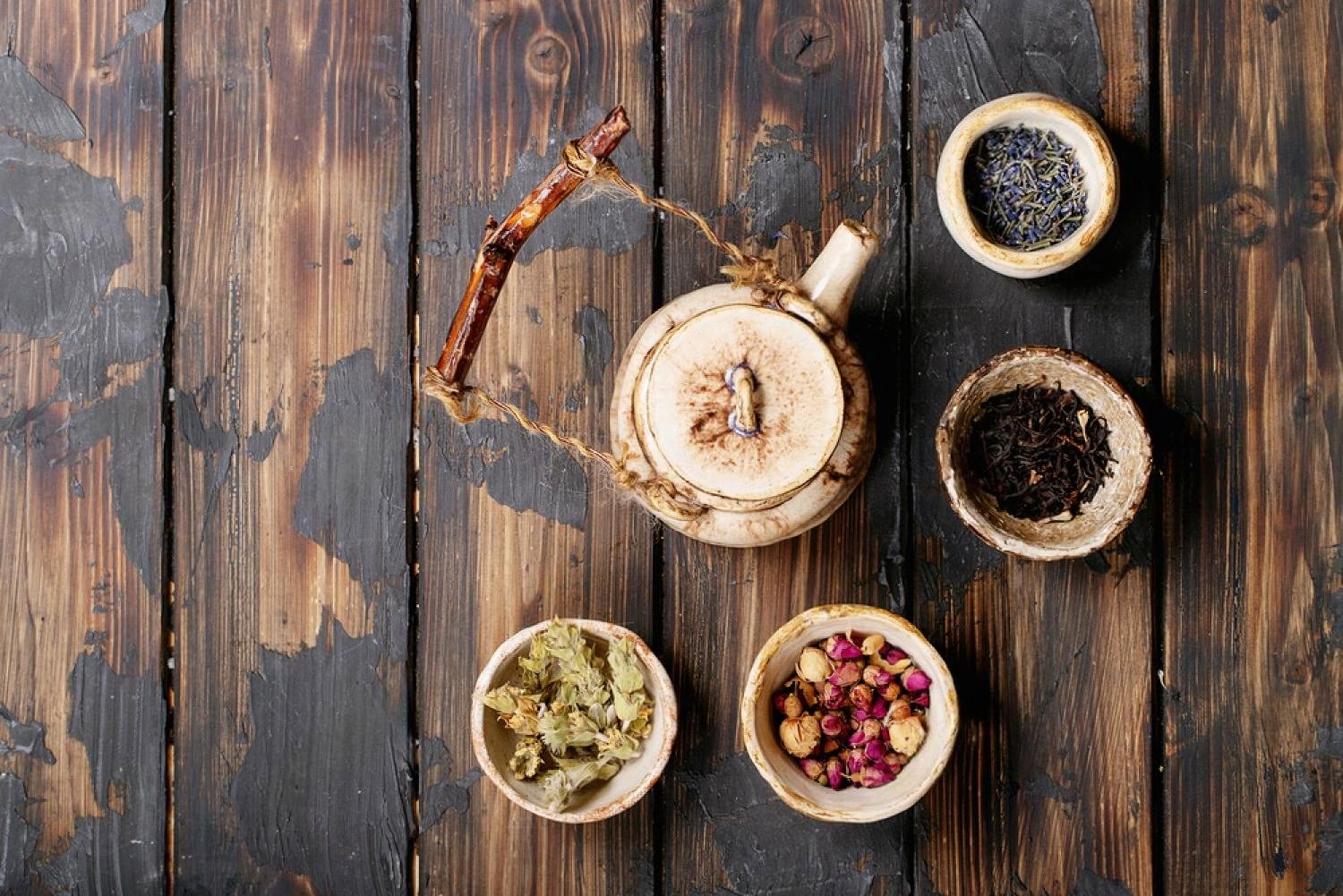
Loose leaf pays you back
Whole leaves expand in the pot, releasing new notes over several infusions instead of a single flat cup.
Section 3
Why loose leaf beats tea bags, especially for Chinese tea
Most tea bags contain “fannings” and “dust”, the smallest broken particles left after grading whole leaf. They brew fast and strong, but they release tannins quickly and lose their aromatic top notes in the first steep. There is nothing left to give.
Whole loose leaves are the opposite. A tightly rolled Tieguanyin ball can unfurl over five or six infusions, showing you floral notes first, then buttery ones, then something almost fruity by the fourth cup. That is where Chinese tea culture actually lives, in the second and third steeps. If you prefer softer, caffeine-free options in the evening, keep something like chamomile herbal tea in Dubai alongside your Chinese collection so you have a choice for late nights.
Section 4: How to choose, and how to store, what you buy
If you are new, start with a Dragon Well green tea for something bright and easy, a Tieguanyin oolong for floral complexity, and a ripe (shou) Pu-erh for the earthy end of the spectrum. Those three cover most of what Chinese tea can taste like. From there, you can branch into Silver Needle whites or roasted Wuyi oolongs based on what you liked.
Look at the leaves before you buy. Good tea has intact, whole leaves with a clear aroma when you smell the pouch. Broken bits, dusty residue and a stale or flat smell are all warning signs. Origin should be specific (Anxi, Wuyi, Yunnan), not just “China”.
Storage is simple but important in the UAE climate. Keep tea in an airtight tin, away from light, heat and strong smells. Green and yellow teas are best consumed within a year of harvest and can even be refrigerated in a sealed pouch. Oolongs and black teas hold up for two to three years. Pu-erh is the exception, it improves with age when stored in a stable, slightly humid spot, though most Dubai kitchens are drier than ideal.
The first infusion greets you. The third infusion tells you the truth.
Frequently asked questions
What is the best Chinese tea for beginners?
Start with Dragon Well (Longjing) green tea or a light Tieguanyin oolong. Both are forgiving to brew, pleasant on their own without milk or sugar, and give you a clear reference point for what “good Chinese tea” tastes like.
If you prefer darker, richer flavours closer to the black tea you already know, try Dian Hong from Yunnan or a ripe (shou) Pu-erh.
How much caffeine does Chinese tea contain?
All true teas from the Camellia sinensis plant contain caffeine, but the amount depends on the leaf and how you brew it. As a rough guide, black tea and Pu-erh sit at the higher end, oolong in the middle, and green and white tea slightly lower per cup.
A typical 200 ml cup of Chinese tea has roughly 30 to 60 mg of caffeine, compared to about 90 to 100 mg in a cup of filter coffee. If you are sensitive, avoid strong late-afternoon steeps.
What is the difference between green tea, oolong and Pu-erh?
The main difference is processing. Green tea is unoxidised, so it keeps its vivid, vegetal character. Oolong is partially oxidised, giving it floral, creamy or roasted notes depending on the style. Pu-erh is fermented after processing, which produces earthy, woody flavours that deepen with age.
In flavour terms, green tea feels fresh and light, oolong feels layered and aromatic, and Pu-erh feels warm and grounding.
Is loose leaf really better than tea bags?
For Chinese tea, yes, clearly. Loose whole leaves have room to expand, release flavour gradually and can be re-steeped several times. Tea bags usually contain broken leaf dust that dumps its flavour in the first minute and then tastes flat.
Convenient tea bags are fine for a quick office cup, but if you want to actually taste why Longjing or Tieguanyin are famous, loose leaf is the only way.
How do I brew Chinese tea if I don’t have any special equipment?
You do not need a gaiwan or a Yixing pot. A standard teapot with a built-in strainer, or even a heatproof glass and a small mesh filter, works well.
Measure roughly 3 grams of tea per 150 ml of water. Use cooler water (around 80 °C) for green, white and yellow tea, and hotter water (90 to 100 °C) for oolong, black and Pu-erh. Steep for 1 to 3 minutes, taste, and adjust. Re-steep the same leaves two or three more times.
Can I buy authentic Chinese tea in the UAE?
Yes. Specialist tea shops and online retailers in Dubai and Abu Dhabi carry named-origin Chinese teas, including Longjing, Tieguanyin, Da Hong Pao and Pu-erh. Look for specific region names on the packaging (Anxi, Wuyi, Yunnan) and a harvest year, especially for green and white teas where freshness matters most.
How long does Chinese tea stay fresh once opened?
Green, yellow and white teas are best within 6 to 12 months of opening, stored in an airtight tin away from light and heat. Oolong and black tea hold their character for 1 to 3 years. Pu-erh is the exception, it can age for decades and often improves with time.
In the UAE’s warm climate, keep tea in a cool cupboard, never near the stove or a sunny window.

Hiking addict, coffee addict, guitarist, reclaimed wood collector and javascripter. Producing at the intersection of aesthetics and intellectual purity to answer design problems with honest solutions. I work with Fortune 500 companies and startups. Tropical swift lover. My mission is to show people that IQOS is a revolution in the world of smoking.